
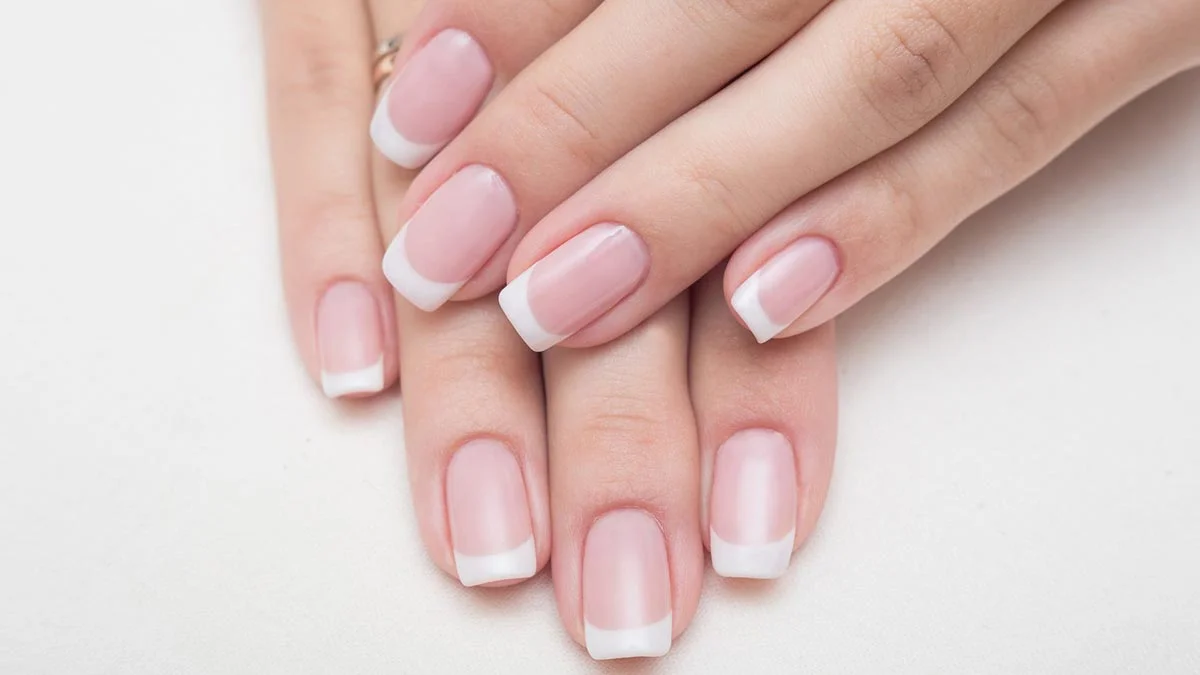
Short french tip nails combine the classic contrast of a sheer or soft neutral base with a crisp accent along the free edge of short, natural-length nails. They give you a clean, intentional manicure without the snagging, heavy apex build-up, or daily maintenance of long extensions.
For decades, French manicures were closely tied to long square or coffin enhancements. Today, short French tips have taken center stage because they fit real life typing all day, working with your hands, exercising, and keeping nails low-risk for breaks. When proportioned thoughtfully on shorter nail beds, the design feels fresh, editorial, and effortless rather than dated.
What Makes Short French Tip Nails Different?
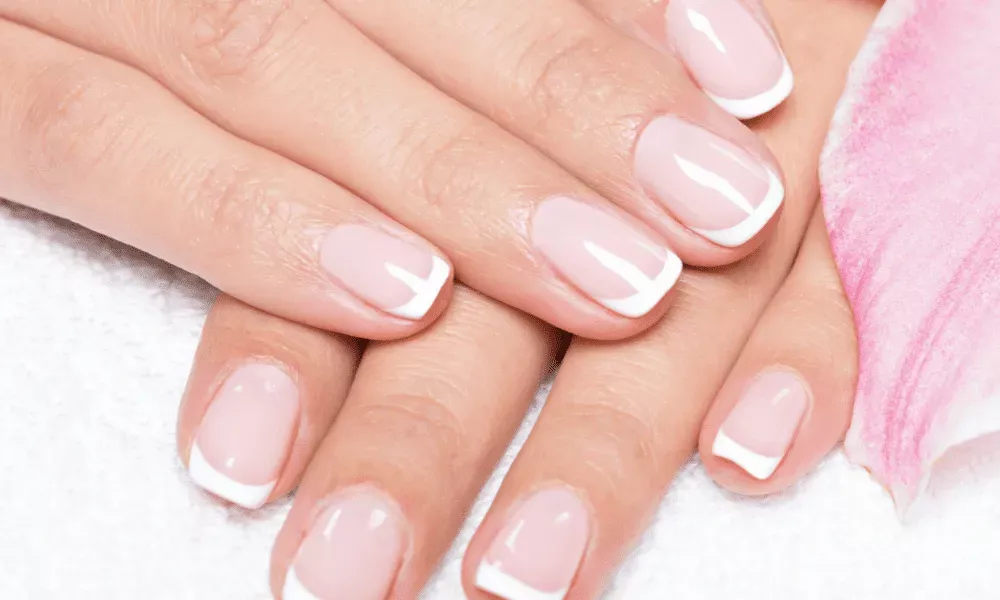
A traditional French manicure often relies on a thick, wide white band and a long free edge to create drama. On shorter nails, a wide stripe can visually chop off the nail bed and make the tip look heavy.
Short french tip nails work best when the tip line is fine, delicate, and proportional to your nail length. Instead of painting a thick block of color across the top, nail artists typically draw a thin crescent or micro-line right along the natural edge. This small adjustment preserves the illusion of length while keeping the nail plate neat and balanced.
Another defining trait is how the base shade behaves. Because the free edge is brief, the transition between the nail bed, the smile line (the curved boundary where the nail plate meets the free edge), and the tip is immediately visible.
Sheer milky pinks, soft nudes, and translucent peach tones smooth out color variations on the nail bed so the fine tip stands out cleanly. For a bolder finish, explore these dark chrome nail ideas and chrome nail ideas, or try seasonal inspiration from these fall nail colors.
Why People Choose Short French Manicures
Practicality is usually the first reason people switch to shorter lengths, followed closely by versatility. Short nails rarely catch on knitwear, hair, or keyboards, and they are far less likely to snap during routine tasks.
From a style standpoint, a short French manicure adapts easily to almost any setting:
-
Workplaces and formal events: The look is polished and understated without feeling flashy.
-
Fast regrowth: Because your nails start out short, a few millimeters of growth looks natural rather than grown-out or top-heavy.
-
Creative flexibility: A tiny tip acts like a clean frame that can stay classic white or shift into subtle color accents.
Popular Short French Tip Nail Ideas
Even within a short length, you have plenty of ways to customize the finish, color palette, and line thickness.
Micro French Tips
Micro French tips use an ultra-thin line sometimes barely a millimeter wide trace along the very rim of the nail. This style is ideal for very short or recently trimmed nails because it adds definition without crowding the small surface area.
Classic Crisp White
A sheer blush or milky base paired with a bright, clean white tip remains the most recognizable version. Keeping the white band narrow and softly curved makes the classic look feel modern and crisp rather than stark.
Milky and Sheer Neutral Variations
Instead of opaque white, many people prefer a soft off-white, ivory, or sheer milk-bath glaze for the tip. Paired with a translucent nude or pink base, this creates a softer, diffused look that blends gently with natural skin tones.
Pastel and Muted Color Tips
Swapping white for dusty rose, sage green, baby blue, soft lavender, or warm caramel adds personality while keeping the manicure wearable. Muted tones generally suit short nails well because high-contrast neon or heavy dark bands can overpower a compact nail canvas.
Double Lines and Subtle Accents
A fine primary tip paired with a second hairline stripe just beneath it, or a single tiny dot near the cuticle, adds visual interest without clutter. Because short nails have limited space, restraint is key one small detail usually reads cleaner than multiple busy motifs.
Choosing the Best Nail Shape for Short Lengths
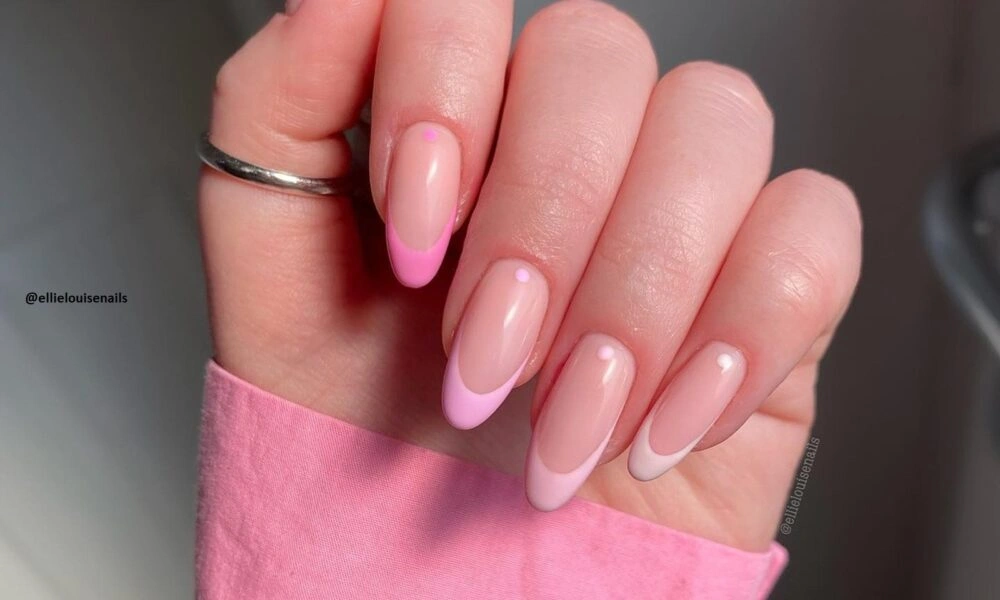
The shape of your free edge shapes the entire mood of short french tip nails. A gentle squoval (square with softly rounded corners) is one of the most reliable choices on short nails because it offers a clean edge for tip placement while resisting corner snags.
Round and soft oval shapes create a softer, more organic silhouette that works well on narrower nail beds or nails prone to chipping at the corners. If you prefer a slightly sharper look, a short almond can work if your nail beds are long enough to taper smoothly without weakening the sides. You can also experiment with different finishes, such as the dimensional effect of cat-eye nails or the added length and structure offered by acrylic nails.
| Nail Shape | Best For | Visual Effect with French Tips | Everyday Wearability |
| Squoval | Most nail beds; first-time short French wearers | Clean, balanced, and structured with soft edges | High; corners are less likely to catch |
| Round | Shorter or narrower nail beds; low-maintenance routines | Soft, natural, and understated | Very high; minimal snagging risk |
| Soft Oval | Medium-short nail beds wanting a gentle taper | Feminine and elongated without sharp points | High when kept reasonably short |
| Short Almond | Longer nail beds with sturdy side walls | Sleek and refined, though narrower at the tip | Moderate to high; narrow tip has less paint space |
Short French Tips vs. Long French Nails
Deciding between short and long French nails comes down to how you balance visual drama with daily convenience. Long nails give nail artists more room for deep smile lines, intricate art, and bold contrast, whereas short nails reward precision, healthy nail beds, and simplicity.
If you type frequently, play an instrument, lift weights, or simply dislike the feeling of long nails, short french tip nails usually win on comfort. If you love dramatic silhouettes and enjoy frequent salon fills to manage length and structure, longer extensions may fit your routine better.
Preparation, Care, and Maintenance Tips
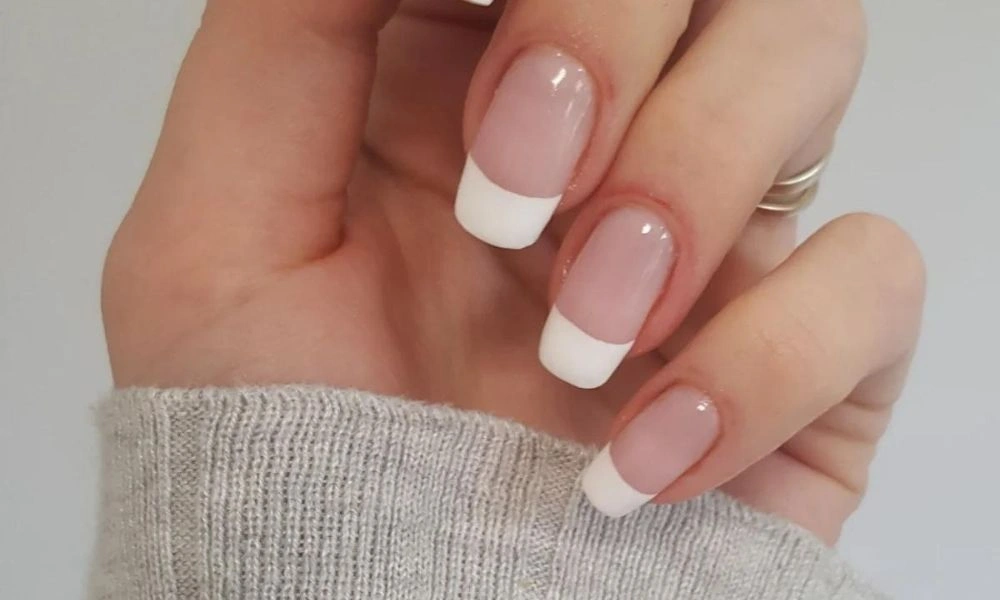
A clean French manicure on short nails depends heavily on prep work. Pushing back cuticles gently rather than aggressively cutting healthy skin and buffing lightly only when needed helps polish apply smoothly and prevents lifting.
Because short nails sit close to the fingertips, hand care matters just as much as polish choice. Applying cuticle oil daily keeps the skin around the nail plate supple and helps prevent dry hangnails that can ruin an otherwise neat manicure. Wearing gloves for dishwashing and harsh household cleaners also protects both natural nails and gel or lacquer finishes from premature wear.
If you wear regular nail polish, a thin base coat, two sheer coats for the base, a steady hand or fine liner brush for the tip, and a glossy or satin top coat will give you a smooth result. If you choose gel, curing thin layers properly helps prevent wrinkling or peeling near the free edge.
Common Mistakes to Avoid
Even simple nail designs can go sideways if a few common pitfalls sneak in:
-
Painting the tip too thick: A wide stripe on a short nail makes the tip look blocky and visually shortens the nail plate.
-
Skipping a sheer base: Bare nails often have uneven tone or ridges; a sheer neutral base unifies the canvas so the tip looks intentional.
-
Rushing the line without steadying your hand: Resting your pinky or wrist on the table gives you far better control when painting a thin edge.
-
Using the nail tips as tools: Prying open cans, stickers, or tabs on short nails can chip the free edge quickly and stress the natural nail underneath.
Frequently Asked Questions
Do short french tip nails make fingers look shorter?
They do not have to. Keeping the tip line thin, choosing a sheer neutral base, and shaping the nail into a squoval or soft oval helps keep the nail bed looking clean and elongated rather than cut off.
Can you do short french tip nails on natural nails without extensions?
Yes. Short french tip nails are well suited to natural nails of modest length, whether you use traditional nail polish, gel polish, or a clear builder overlay for light strength.
What base color works best for short french tips?
Sheer milky pinks, soft blush tones, and translucent nudes are popular choices because they even out natural nail color while letting the tip stand out cleanly.
How can you paint neat French tips at home on short nails?
Use a fine nail art liner brush or a clean angled brush dipped in polish remover to sharpen the edge, and steady your painting hand against a flat surface. Working in thin layers is much easier to control than loading too much product on the brush.
Are short french tip nails good for everyday and office wear?
Yes. Because the length is practical and the palette is typically classic or muted, short French manicures fit office environments, casual days, and special occasions alike.
How often do short french tip nails need touch-ups?
That depends on how fast your nails grow and whether you wear lacquer or gel. Many people refresh regular polish once a week and touch up gel every two to three weeks as regrowth becomes noticeable.
Final Thoughts
Short french tip nails prove that a manicure does not need extra length to feel polished and put-together. By keeping the tip delicate, picking a complementary base and nail shape, and caring for your cuticles and natural nails, you can get a clean, adaptable look that fits seamlessly into everyday life.
